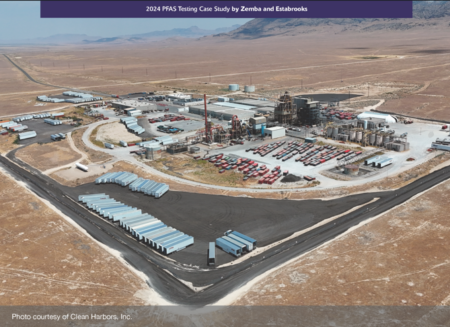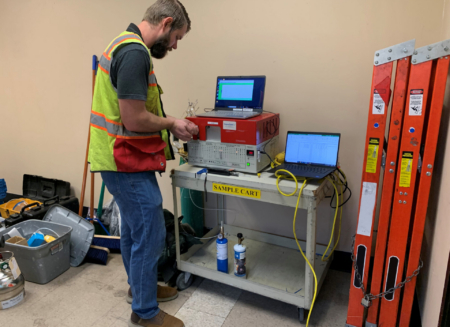
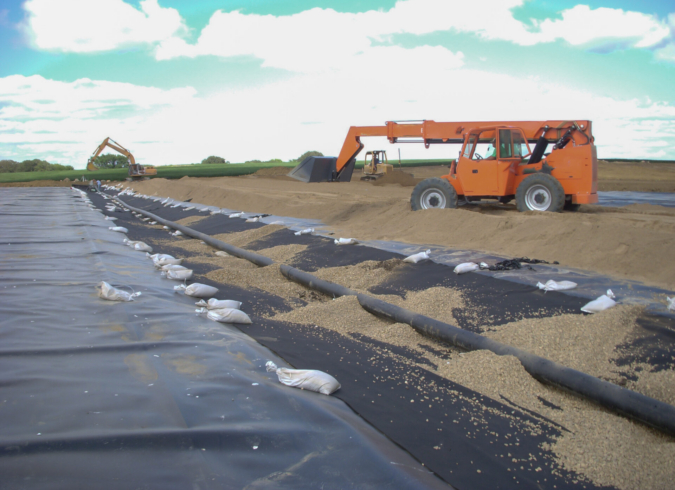
On July 1, 2026, the New York State Department of Environmental Conservation (NYSDEC) published a Notice of Proposed Rulemaking introducing significant amendments to 6 NYCRR Part 360 (Solid Waste Management Facilities) and Part 363 (Landfills), including the addition of a new Subpart 363-12 governing landfill leachate treatment facilities. Together, these proposed changes would fundamentally alter how landfill leachate is managed across New York State.
For landfill owners and operators, the implications are substantial. Understanding what is being proposed, where technical questions remain, and how to engage in the public comment process is critical.
What the Proposed Rules Would Require
Under the proposed amendments to Parts 360 and 363, active Municipal Solid Waste (MSW) landfills and qualifying Construction and Demolition (C&D) debris landfills with leachate collection systems would be required to treat leachate prior to discharge to a Water Resource Recovery Facility (WRRF) or other authorized discharge location. The stated objective is to reduce the potential reintroduction of contaminants into the environment and to better manage concentrated residuals that WRRFs may not be designed to remove.
The full regulatory documents are available on the NYSDEC website: NYSDEC Proposed Rulemaking – Solid Waste Management Revisions.
The proposed rules under both Part 360 and Part 363 place particular emphasis on “emerging contaminants,” specifically PFAS compounds (including PFOA and PFOS) and 1,4-dioxane. The supporting documents suggest a treatment approach centered on capital-intensive technologies, including multi-stage reverse osmosis (RO), granular activated carbon (GAC) on RO permeate, evaporation and solidification for concentrate streams, and thermal oxidation for vapor effluent. Capital and long-term operating costs associated with these systems are projected to reach several tens of millions of dollars per facility, representing a significant financial commitment for landfill owners and operators.
Where We See Important Questions
Sanborn Head’s technical team has reviewed the proposed amendments to both Part 360 and Part 363, and while we support the underlying goal of protecting public health and the environment, our review raises several technical and practical questions that we believe warrant careful consideration before these rules are finalized.
The 99.9% Removal Standard
The proposed rulemaking includes a quantitative treatment requirement of 99.9% reduction for certain contaminants listed in Tables 3A and 3B of the regulation. Our concern is that this threshold was not derived from a human health or environmental risk assessment. Rather, it appears to be framed as an “achievable and measurable” compliance criterion. In practice, a 99.9% reduction requirement may drive contaminant concentrations to levels below analytical detection limits, making it difficult or impossible to demonstrate compliance through standard monitoring methods. We believe the basis for this threshold, and its applicability across a broad range of contaminants and facility types, deserves further scrutiny and public discussion.
Clarity on Target Compounds
The proposed language references “emerging contaminants” broadly, naming PFAS, PFOA, PFOS, and 1,4-dioxane at various points in the supporting documents. This lack of specificity around which compounds are subject to the 99.9% removal requirement creates uncertainty for landfill operators trying to evaluate treatment technology options and plan for compliance. Clear, compound-specific requirements are needed to allow for meaningful technology selection and cost planning.
PFAS Treatment: Progress and Remaining Gaps
Treatment technologies for certain PFAS compounds have advanced considerably. For longer-chain PFAS such as PFOA and PFOS, technologies like foam fractionation can reduce concentrations to below detection limits. However, the same cannot be said for short-chain PFAS, where achieving 99.9% removal can be challenging without significant pre-treatment, high waste concentrate volume, and/or significant cost/energy consumption. The proposed rules do not clearly distinguish between PFAS compound classes, which could create compliance ambiguity for facilities where short-chain PFAS often contribute to majority of mass in leachate.
1,4-Dioxane: A Different Challenge
Of particular concern is the treatment requirement as it applies to 1,4-dioxane. Unlike PFAS, 1,4-dioxane is not a recalcitrant compound. It can degrade naturally under aerobic conditions, including in aerobic activated sludge systems and in surface waters. Reverse osmosis, one of the primary technologies suggested in the supporting documents, is not highly effective at removing 1,4-dioxane. Achieving meaningful reductions of 1,4-dioxane in leachate requires advanced oxidation or co-metabolic degradation, approaches that are significantly more complex and costly than PFAS treatment. Requiring the same 99.9% removal standard for 1,4-dioxane as for recalcitrant PFAS compounds does not reflect the different environmental behavior of these substances and may result in treatment requirements that are neither technically practical nor cost-effective.
The Role of Water Resource Recovery Facilities
A broader question raised by these proposed changes is whether a blanket pretreatment mandate is the most appropriate regulatory mechanism for all contaminants of concern. Many conventional pollutants, as listed in Table 3A and 3B, in leachate have been successfully managed at WRRFs for decades. Requiring on-site treatment to the same standard for conventional and emerging contaminants alike may result in significant expenditures without a proportional public health or environmental benefit. WRRFs have established their own pretreatment requirements and discharge limits based on their specific capabilities and may better align regulatory requirements with actual treatment needs, especially for the conventional contaminants.
What This Means for Landfill Owners and Operators
The proposed amendments to Parts 360 and 363 represent a significant shift in how New York State expects landfill leachate to be managed. If finalized as written, these rules would require substantial capital investment and ongoing operational expenditures at affected facilities. The public comment period is an important opportunity for landfill owners and operators to raise technical questions, share operational experience, and help shape a final rule that is both protective and achievable.
Sanborn Head’s technical experts are available to help you understand the potential impact of these proposed changes on your facility and to assist in developing informed, technically grounded public comments.
How to Engage
NYSDEC is hosting virtual public comment hearings on September 2, 2026. Registration to speak must be completed by September 1, 2026. Written comments are due by September 9, 2026.
We encourage all landfill owners and operators to participate. Your technical experience and operational knowledge are valuable contributions to this rulemaking process.
To register for the virtual hearings or submit written comments, visit the NYSDEC proposed rulemaking page: NYSDEC Proposed Rulemaking – Solid Waste Management Revisions.
If you have questions about the proposed regulations or would like to discuss how they may affect your facility, please contact Lingke Zeng at lzeng@sanbornhead.com.
Posted In: Articles
Tagged In: PFAS, Regulations